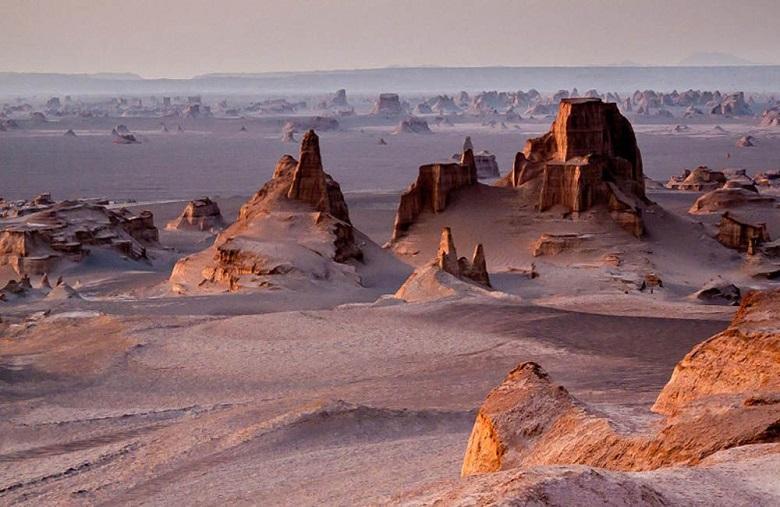


Esta expedición se adentra en el «Corazón Antiguo de Persia», una región que constituye un puente geológico entre el supercontinente Gondwana y Eurasia. Comenzamos en Kerman, la puerta de entrada al Desierto de Lut, declarado Patrimonio de la Humanidad por la UNESCO y reconocido por albergar algunas de las formas eólicas más espectaculares del mundo. Desde allí viajamos hacia el norte hasta Tabas, conocida como el «Museo de los Fósiles de Irán».
Este recorrido es una auténtica inmersión en la geomorfología, la paleontología y la geología económica. Bajo la guía experta de profesores de la Universidad de Shiraz, los participantes explorarán paisajes extremos donde los basaltos volcánicos se encuentran con antiguos arrecifes de coral fosilizados, ofreciendo una visión integral de la evolución geológica de la Meseta Iraní.
Llegada al aeropuerto internacional de Teherán y continuación del viaje hacia Kermán, la puerta de entrada al desierto de Lut y al corazón geológico de Irán.
The journey commences in the high-altitude city of Kerman. Following an introductory seminar led by our scientific team, we will explore the structural geology of the Kerman basin. The afternoon focuses on the transition from the city’s high-mountain terrain to the edge of the Lut Desert. We will analyze the alluvial fans and "pediments" that form the boundary of the desert, providing a clear picture of the tectonic subsidence that created the Lut Depression. This evening serves as a technical orientation for the extreme conditions of the days ahead.
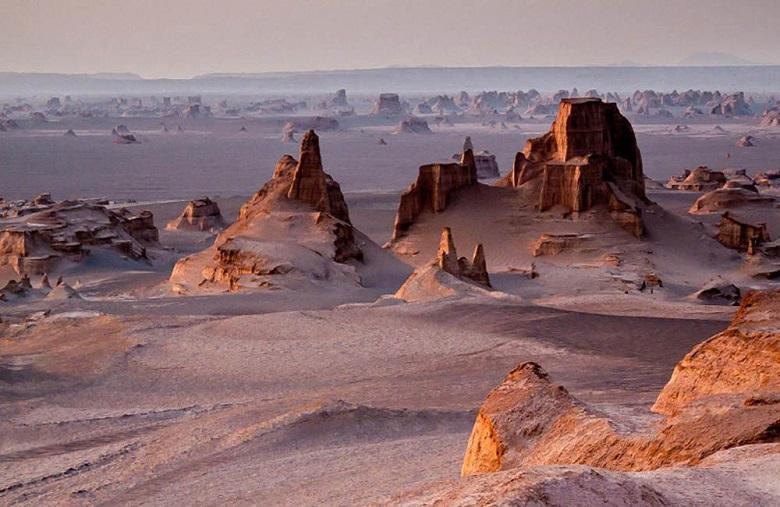
Today is dedicated to the world-famous Yardangs (Kaluts) of the Lut Desert. We will spend the day traversing these massive, corridor-like structures carved into the silt and clay of ancient lakebeds. Our scientific focus will be on aeolian processes, wind-flow patterns, and the role of the "120-day wind" in shaping this landscape. Participants will study the sedimentary layers of the Lut Formation, which provide clues to the humid periods of the Pliocene and Pleistocene in what is now a hyper-arid desert.
Today is dedicated to the world-famous Yardangs (Kaluts) of the Lut Desert. We will spend the day traversing these massive, corridor-like structures carved into the silt and clay of ancient lakebeds. Our scientific focus will be on aeolian processes, wind-flow patterns, and the role of the "120-day wind" in shaping this landscape. Participants will study the sedimentary layers of the Lut Formation, which provide clues to the humid periods of the Pliocene and Pleistocene in what is now a hyper-arid desert.
As we leave the desert and head north toward Tabas, the landscape shifts toward the rugged mountains of the Tabas Block. This transit day focuses on the Nayband Formation, a crucial Triassic-Jurassic boundary site. We will make several stops to observe the transition from marine to terrestrial environments. The professors will point out the coal-bearing layers and the shift in fossil assemblages, providing a live demonstration of how sea levels fluctuated during the Mesozoic era on the Iranian micro-continent.
Today we explore the mysterious Kal-e Jeni (Jinn’s Canyon), a spectacular example of fluvial erosion in an arid environment. We will analyze the canyon’s vertical walls to understand the rapid incision caused by flash floods over thousands of years. The day focuses on "actualism" in geology—observing how water, though rare, remains the most powerful sculptor of the desert. We will also examine the "Qanat" systems in the area, discussing the hydrogeology of how ancient Persians tapped into alluvial aquifers to sustain life in the desert.
Tabas is a world-class destination for paleontologists, and today we visit its most significant fossil beds. We will explore the Devonian and Carboniferous outcrops, which are exceptionally rich in brachiopods, corals, and trilobites. The scientific leader will guide the group in identifying these specimens and reconstruct the ancient marine environments of the Paleo-Tethys Ocean. This is a hands-on day for stratigraphy, where participants can see hundreds of millions of years of life history compressed into distinct, visible layers.
On our final day, we head toward the historic city of Yazd, passing through the Bafq mining district. This region is a powerhouse of economic geology. We will discuss the formation of massive iron ore and lead-zinc deposits, exploring the magmatic and hydrothermal processes that concentrated these minerals. The tour concludes in Yazd, where we will have a final farewell dinner and a wrap-up session, reflecting on the 500-million-year history we have traversed across the heart of Iran.
Regreso a Shiraz atravesando los paisajes del centro de Irán y traslado al aeropuerto para el vuelo de salida.