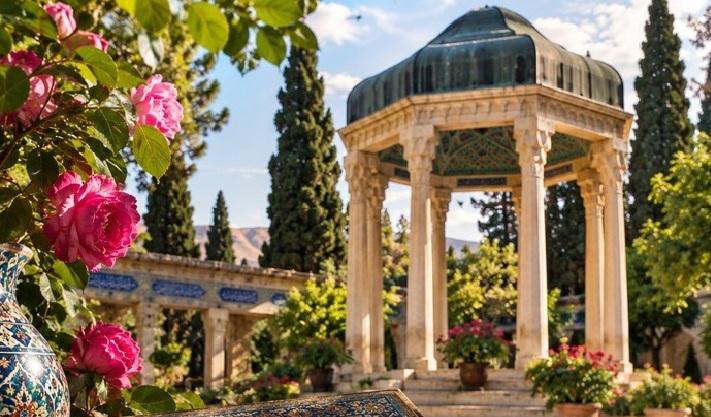


A Journey Through Persian Poetry
Iranians are an intelligent, inventive, and artistic people. They are versatile and adaptable, capable of responding creatively to different situations. They love fun, laughter, and outdoor activities. They enjoy poetry, fiction, folktales, anecdotes, jokes, and even rumors. They are particularly skilled at making witty jokes at the expense of those who wield power and authority.
Mehdi Akhavan Sales, one of Iran’s leading modern poets, once wrote: “Our life is poetry, legend, and myth.” Although Iranian life encompasses much more, poetry, mythology, legends, mysticism, and religion play a significant role in everyday life. Emotions often have a strong influence on how Iranians form their opinions. An ordinary Iranian may be more easily persuaded by an anecdote, a relevant line of poetry, or an extraordinary explanation than by logical arguments or empirical evidence alone.
This, then, provides a glimpse into the foundations of Iranian society and culture. Persian poetry tells the story of one of humanity’s most diverse, dynamic, and fascinating civilizations—a story of a land and its people who have experienced countless changes throughout history. Let us listen to this remarkable story!
Explaining the appeal of Persian poetry is as challenging as describing the flavors of exquisite cuisine, the sweet fragrance of a garden in late spring, or the pleasure of listening to music. The beauty of the Persian language, the intensity of its rhythms, the richness of its rhymes, and the vivid imagery of its poetry can be captivating even before the reader fully understands its meaning. Like a complex fugue by Bach, Persian poetry can be intricate and sophisticated, yet it can also feel as immediate and accessible as a folk song.
Persian poetry possesses a quality sometimes described by the expression sahl-e momtane—a style that appears simple and effortless at first glance but reveals extraordinary artistic mastery upon closer examination.
Traditional Persian poetry employs approximately seventy different metrical patterns, offering considerable flexibility and allowing poets to express themselves without forcing the natural flow of the language. The richness of Persian vocabulary and its abundance of rhyming words also enable poets to compose lengthy works with remarkable ease. Achieving a similar effect in English can be far more challenging without making the language sound forced or unnatural.
The rich tradition of poetic imagery, symbolism, and recurring literary themes has given Persian poetry an allusive and multilayered style. Poets may use deliberate irony, ambiguity, and subtle references to convey deeper meanings. In the hands of great masters such as Hafez and Bidel, these techniques can create extraordinary harmonies between sound, imagery, and meaning.
Poetry is deeply embedded in the everyday culture of the Persian-speaking world. It is woven into daily conversations, debates, education, friendships, travel, and hospitality. The warmth, generosity, and graciousness with which Persian poetry is shared are also part of its enduring appeal. For a few precious moments, an outsider may feel welcomed as an insider, experiencing a cultural tradition that brings people together across generations.
A similar phenomenon can be observed in the deep familiarity many people have with the sacred texts of Islam, particularly the Quran and Hadith. These texts provide cultural and spiritual points of reference, shaping values, beliefs, and perceptions of authority. This association between words, meaning, and cultural identity extends to the decoration of buildings and everyday objects with quotations from sacred texts and poetry. For many, such inscriptions represent one of the highest expressions of their cultural heritage.
Persian poetry embraces a fascinating range of contrasting perspectives. It moves between skepticism and mysticism, sensuality and spirituality, political commentary and philosophical reflection. Its richness lies in its imagery, subtle rhythms, ambiguous allusions, and ability to explore multiple layers of meaning. It can offer playful satire, profound insights into hardship and tragedy, and enduring messages of hope, grace, and mercy.
Within this extraordinary literary tradition lies an entire world waiting to be discovered—a world that reflects the complexity of Iranian history, culture, and human experience.
We invite every reader to embark on a fascinating literary adventure and discover the beauty, wisdom, and timeless appeal of Persian poetry through A Journey Through Persian Poems