

Christmas in Iran: A Celebration of Faith, Heritage, and Coexistence
Iran, a country with an ancient history and a remarkably diverse culture, is home to one of the world's most fascinating expressions of Christmas. While Christians make up a small minority of the population, the holiday is embraced as both a religious observance and a broader cultural event. Iran's Christian community — made up mainly of Armenians and Assyrians — is concentrated in cities like Tehran, Urmia, Tabriz, and Isfahan. Following their religious calendar, Armenian Christians in Iran mark the birth of Jesus Christ on January 6th.
Though rooted in Christianity, Christmas in Iran extends beyond its religious community. Muslims and people of other faiths often join in the festive spirit, greeting their Christian friends and neighbors — a quiet but meaningful reflection of the religious and ethnic coexistence that has long defined Iranian society.
Where Christmas Comes Alive in Iran
Jolfa, Isfahan
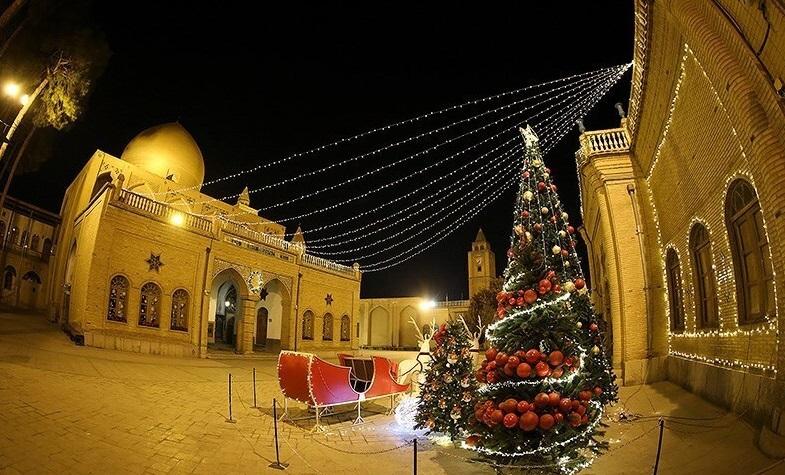
This historic Armenian quarter, home to the stunning Vank Cathedral, is one of Iran's liveliest centers for Christmas celebrations. Decorated pine trees, glowing shop windows, and elaborate church ceremonies draw both locals and tourists each year. With its distinct Iranian-European architecture and beloved cafés, Jolfa has become one of Isfahan's most charming neighborhoods, especially during the holiday season.
Tehran
In the capital, Mirza Shirazi and Nejatollahi streets, along with the Majidiyeh neighborhood, take on a festive glow — colorful storefronts and Christmas trees create a cheerful atmosphere that Tehranis look forward to every winter.
East and West Azerbaijan Provinces
Few places capture Iran's deep Christian history like the northwestern provinces of East and West Azerbaijan, home to 187 churches and monasteries. Several stand out for their age and significance:
Saint Thaddeus Cathedral (Qareh Kelisa) — Located in Chaldoran, West Azerbaijan, this is one of the oldest churches in the world and is linked to one of Jesus Christ's apostles. Its older section, built from dark hewn stone, gives the church its name — "Qareh Kelisa," or "Black Church." It was inscribed on the UNESCO World Heritage List in 2008.
Saint Stepanos Monastery — Built in the 9th century near Jolfa in East Azerbaijan, this church blends Armenian and Persian architectural styles and was named a UNESCO World Heritage Site in 2008 as part of the Monastic Ensembles of Iran.
Zorzor Church — Dating to the 14th century, this Safavid-era church in Chaldoran is notable for being carefully relocated in the 1980s to save it from a dam project, without compromising its original structure.
Church of the Holy Mary — Tabriz's largest and oldest church, dating to the 16th century, remains a central site for major Armenian religious ceremonies.
Mojumbar Church (St. Hripsimeh) — A 17th-century church roughly 30 km from Tabriz, prized for its historic architecture and scenic setting.
Christmas Traditions in Iran
Family Gatherings
As in much of the world, Christmas in Iran is centered on family. Traditional dishes like harisa and roasted turkey are staples of the holiday table. Iranian Armenians also prepare sabzi polo mahi (herbed rice with fish) and kuku sabzi (herb omelet), rounding out the meal with pirohk and gata — a flaky, layered pastry filled with butter and walnuts.
Gift-Giving
Children look forward to new clothes and presents, adding extra excitement to the season.
Home Decorations
Christmas trees, ornaments, and nativity scenes bring festive warmth into Armenian and Assyrian households across the country.
Church Ceremonies
Midnight services are the heart of the celebration. After a special Christmas dinner, families head to church for hymns, prayers, and worship, greeting one another with warm embraces. Candlelight fills the sanctuary as congregations wait together for the bells to ring at midnight.
More Than a Religious Holiday
In Iran, Christmas has come to represent something larger than its religious origins — a symbol of hope, unity, and friendship across faiths. Year after year, Iranians of different backgrounds come together to celebrate it with warmth and goodwill, a quiet testament to the country's long history of religious diversity and coexistence.