

Iran Mountaineering Paths
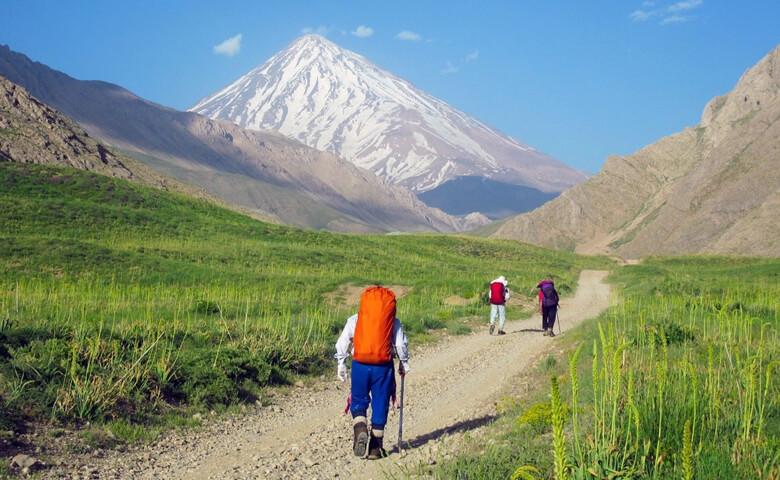
Mountaineering attracts many people with its beauty and its challenges. Working with a team to overcome difficulties, and sometimes simply to survive, is one of the most remarkable experiences a person can have. The hardships of the mountains also happen far more often there than in most other activities, and they put the hardships of everyday life in perspective.
Reaching a summit, feeling the sun on your face at an altitude that challenged you to get there, and looking back down the path you climbed through hard effort give you a unique sense of strength. That strength stays with you when you return to daily life, and problems that once seemed overwhelming no longer do.
To enjoy mountaineering safely and gain all of these benefits, you need sufficient knowledge of mountaineering skills, equipment, routes, and conditions. You also need access to reliable theoretical sources and a skilled, practical team.
Mountains of Iran
Iran’s many mountain ranges and high summits make it a top choice for professional and amateur mountaineers alike. Three ranges host a significant number of its summits:
Zagros, which stretches from northwest to southeast and is Iran’s longest range. Its best-known section is the Dena Mountains.
Alborz, which stretches from northwest to northeast. It includes the volcanic Damavand, which shares its name with its peak. At more than 5,600 m above sea level, Damavand is the highest point in Iran.
The Central Mountain Range.
These are only a few highlights of Iran’s mountains. This article series begins with the Zagros.
The Zagros Range
Several provinces, including West Azerbaijan, Zanjan, Kurdistan, Lorestan, and Fars, each host part of the Zagros and share in its natural beauty. Here we describe two routes to Ghash-e-Mastan Peak, both well evaluated by professional mountaineers.
Ghash-e-Mastan Peak
Ghash-e-Mastan is a 4,550 m peak in the Zagros with several climbing routes. Two are described below.
Route 1
This is a 1.5-day program with about 9 to 10 hours of climbing. The region is cold and fully snow-covered from November to March, sometimes into April. The best time to climb is May to October, depending on the climber’s preference. The snowy season is also a good opportunity for those who want to try snow and ice climbing. The difficulty level is average.
We start in the scenic Padena region and trek to the village of Khafr, where the climb begins. After about 3 hours of climbing, at roughly 3,000 m, we reach a campsite and spend the night. The next morning we continue to the summit, which takes an average group about 6 hours.
Route 2
This route crosses a series of peaks on the way to Ghash-e-Mastan. We start in the Bijan area of Semirom and climb the first peak, Bordeh Atash. We then continue over peaks including Sijani, Hozdal, Hara, Karsomi, Mash, Borj-e Aseman, Ghezel Ghole, and Benruz before reaching Ghash-e-Mastan. Along the way we also visit a registered cave.
The program takes an average group 3 days, and its difficulty is average.
About Pars Tourist Agency
With 20 years of experience in Iran tourism, Pars Tourist Agency works with professional mountaineers and teams to run mountaineering tours. Join our tour team for a journey to dreamlike mountain landscapes, led by professional guides on tested, standard routes with safety as the priority.